Author: Charlotte Wilkes

  • How to Become a Beauty Content Writer 

    How to Become a Beauty Content Writer 

    Turning Your Passion for Skincare into a Profession 

    The beauty industry is constantly evolving — from buzzy new ingredients and cutting-edge treatments to shifts in how we talk about aging and wellness. If you’re someone who spends hours researching products, watching skincare tutorials, or chatting about the latest in cosmetic treatments, you may have the makings of a beauty content writer. But how do you turn that passion into a career? 

    Let’s explore the steps to becoming a beauty content writer, and we’ll take inspiration from one writer’s journey who transformed a personal obsession with skincare into a fulfilling and credible profession. 

    1. Start With Genuine Passion 

    Great beauty content writers don’t just follow trends — they live and breathe the subject. That was certainly the case for me when I discovered my love for skincare during university. After being introduced to the power of UVA sunblock by a beauty therapist I met in the student halls, I became fascinated by the science of skin and its aging process. 

    If you’re constantly researching ingredients, testing products, or learning about skin health, that passion can become the foundation of your writing career. 

    2. Educate Yourself Beyond the Surface 

    Beauty content isn’t just about reviewing lipsticks or serums. Today’s readers want trustworthy, well-researched information — especially in areas like skincare and medical aesthetics. 

    To deepen my knowledge, I trained as a beauty therapist after graduating from university. This gave me hands-on understanding of how skin behaves and how treatments work. Whether it’s through formal training, skincare certifications, or simply deep self-study, building a solid knowledge base is essential. 

    3. Write From Experience 

    One of the most compelling aspects of beauty writing is the personal angle. As a freelance beauty writer, our example has personally trialled procedures like Botox, Profhilo, and Sculptra. That lived experience brings authenticity and nuance to her content — something that readers (and editors) truly value. 

    If you’re trying a new treatment or changing your skincare routine, document the process. Take notes, photos, and track results. That real-world insight can shape into powerful blog posts, reviews, or feature articles. 

    4. Interview the Experts 

    The best beauty content often includes expert input. Dermatologists, cosmetic chemists, surgeons, and facialists can offer insights that elevate your writing from anecdotal to authoritative. 

    I interviewed professionals like Dr. Uliana Gout and facialist Andy Millward — the latter noted for his pioneering work in barrier repair. These conversations not only enrich content but also build your credibility and professional network. 

    Start reaching out to experts via email or social media. Even short quotes can add major value to your content. 

    5. Find Your Niche and Voice 

    While beauty writing is a broad field, carving out a niche helps you stand out. I specialise in facial aesthetics and cosmetic surgery — topics I’m passionate about and personally familiar with. I know that readers considering surgery need more than facts; they need empathy and trust. 

    Ask yourself what excites you most: Is it natural beauty, ingredient science, sustainable skincare, or perhaps men’s grooming? Once you find your angle, build a voice that feels honest, informative, and approachable. 

    6. Stay Ahead of Industry Trends 

    Skincare is moving away from harsh, stripping treatments toward barrier-supportive, bio-identical ingredients. I’ve followed an anti-inflammatory diet since the 1990s — I was ahead of the curve, understanding the connection between skin, diet, and inflammation well before it went mainstream. 

    As a writer, keeping up with trends like “skin-identical” ingredients or the microbiome is vital. Follow leading dermatologists, attend beauty expos, read journals, and never stop learning. 

    7. Pitch, Publish, and Persevere 

    Once you’ve developed your skills and built up samples (even if they’re blog posts or Instagram captions), start pitching to magazines, beauty brands, or content agencies. Persistence is key — many successful writers started by freelancing part-time and gradually built a portfolio. 

    The road to becoming a beauty content writer isn’t necessarily linear, but with passion, curiosity, and consistency, it can lead to a deeply rewarding career. 

    Final Thoughts 

    Being a beauty content writer is about more than describing products — it’s about storytelling, science, and human connection. As one seasoned writer puts it, “Clients must feel at ease and trust the information they read. They don’t just want facts – they want heart and soul.” 

    If you bring both to your writing, the beauty world is ready for your voice. 

  • Ten Years Younger in Ten Days: Controversial makeover show gets a makeover

    Ten Years Younger in Ten Days: Controversial makeover show gets a makeover

    Do you remember 10 Years Younger from 90s?

    Have you let yourself go in the past 10 years? Don’t be too hard on yourself. Even classic makeover shows fall out of fashion and need a makeover. But can a new format revive this controversial cosmetic surgery makeover show from the 90s? Are makeover shows even welcome in this brave new world of body positivity, where saggy bellies flop out and proud?

    The original Ten Years Younger was hardcore

    When cosmetic surgery first become available to the masses, middle aged ugly ducklings queued up to be transformed on 10 Years YoungerThe Great British Public guessed their age before and after a bruising  round of surgery to see if it had worked – they didn’t hold back.

    Is it time for a revival?

    But times changed and extreme makeover shows lost their novelty value. Cosmetic surgery became normalised, vulgar even. An ethical dilemma proved their ultimate downfall: can makeovers inspire a life changing transformation or will their new found confidence wear off with the Botox?

    There’s even a male contestant now!

    It’s not a promising start: downgraded to Channel 5, where reality shows go to die. Cosmetic surgery is replaced by less hardcore non-surgical treatments and a ten day stopwatch adds a bit of drama. The D-list celebrity presenter (replacing Nicky Hambleton-Jones) valiantly whispers the virtues of inner beauty as the contestant winces from her Botox injection. 

    Read more:

    I still prefer the 90s version.

    But the contradiction at the heart is fudged. In an age of body positivity, why is cosmetic surgery on the rise? Why must we pretend to love our wrinkles whilst mainlining Botox on the quiet? Technically the show is a success: the team of experts still manage to take ten years off, even without surgery. But I have a feeling that this low-rent revamp will remain a dirty little secret, just like cosmetic surgery.

  • Review of Heliocare 360 Mineral Fluid Sunscreen spf 50

    Review of Heliocare 360 Mineral Fluid Sunscreen spf 50

    Most of my clients take absolutely no notice when I tell them to wear sunscreen all year round.
    They glaze over when I explain that UVA rays are just as strong in the winter and will prematurely age their skin by stealth.

    Sunscreen can actually reverse sun damage!

    I get it. I really do. Prevention is boring.
    So imagine my delight when new research proved that sunscreen could reverse sun damage, not just prevent it – my clients have no excuse now! There is a catch, though. It has to be worn every single day for at least a year. Come rain or shine.
    My clients are impatient, however, and want results now.

    Are moisturisers obsolete?

    There is another catch. Most sunscreens use chemical filters to absorb and neutralise UVA rays before they can damage your skin.
    To be effective, these chemical sunscreens need to touch the skin; moisturisers dilute them. Sunscreens are often hydrating, but clients are reluctant to give up their expensive anti-aging creams and think their skin will wrinkle and sag overnight.

    Read more

    ‘But my moisturiser has an SPF in it.”

    Moisturisers with SPFs aren’t regulated like sunscreens. They rarely contain sufficient UVA protection because it changes the texture of a cream, and beauty brands know that customers are easily swayed by texture and scent.

    Remember that SPFs degrade quickly in the daylight and might not be still be working when you nip out on your lunch hour.

    In reality, only the most advanced sunscreens cover the full range of UVA rays.

    Texture of Heliocare 360 mineral fluid spf 50

    Physical vs chemical sunscreens

    There is one other option for my sunscreen phobic clients. Physical/mineral sunscreens form a barrier which reflects UVA away from the skin before it can do any damage – so you can apply it on top of your favourite moisturiser.
    There is a catch, however. Physical sunscreens rub off very easily, so be careful when applying make-up on top or touching the skin.
    I am obsessive: I use a layer of chemical sunscreen, wait 10 mins, and then a layer of a physical one to make sure no UVA gets through.

    Read More:

    Heliocare 360 mineral fluid sunscreen SPF 50

    I trust Heliocare and have been using their sunscreens for years.

    This impressive physical sunscreen contains 2% zinc oxide and protects against the whole range of UVA rays (I always recommend at least 10%).

    However, many companies shy away from this expensive ingredient, relying more on titanium dioxide, which only protects against short wave UVA rays. 

    My client Kelly

    I have been nagging one of my clients to protect her English rose complexion for ages. (Ironically, she has the trickiest skin yet is my most low maintenance client). I knew that Heliocare would be perfect for her skin.
    Usually, make-up settles in the thirsty skin between her nostrils and the corner of her lips (nasolabial folds), but not this time. She didn’t even need a primer, let alone a moisturiser. The high level of zinc oxide leaves a white cast, but she loved how it toned down her redness.

    Heliocare sunscreens and me

    I use it every morning, layering over my chemical sunscreen Heliocare XF gel SPF 50. Unfortunately, the white cast shows up even on my pale skin – if only they would add a tint.

  • Is the Microcurrent Facial still relevant in today’s crowded Aesthetics Market?

    Is the Microcurrent Facial still relevant in today’s crowded Aesthetics Market?

    Hollywood has gone holistic! Microcurrent, the non-surgical facelift which tones tired and saggy muscles, is back in fashion after decades in the cold. It has capitalised on the recent surgery backlash and reinvented itself as a red-carpet-ready facial beloved of celebrities-in-the-know. 

    Let’s re-evaluate the Microcurrent Facial.

    Microcurrent had very little competition when it was first launched in the ‘80s. But the non-surgical market has expanded rapidly since then, and it has been overtaken by more sophisticated firming treatments such as radiofrequency and ultrasound. It languished amongst medispa treatments such as microdermabrasion, lunchtime peels, and oxygen facials until Hollywood came calling. Where does it belong now?

    Have you tried a Microcurrent Facial?

    After preparing your skin, a therapist runs two metal prongs all over the face, delivering a low-voltage current through the skin to perk up weak, ageing muscles underneath. Unlike the rest of the body, facial muscles are directly connected to the skin, so brows, jowls, and cheekbones are lifted, and nasolabial folds softened for several days afterwards. Improved facial circulation brightens the skin so that active ingredients penetrate more deeply, and makeup goes on more smoothly. Improved lymphatic drainage reduces any facial puffiness, especially under the eyes. 

    Why do therapists love Microcurrent Facials?

    Therapists love microcurrent facials because their clients love the instant glow. Their skin looks more awake, more supple, and generally healthier. However, a good therapist wouldn’t recommend microcurrent to a client with loose, sun-damaged skin because it tightens muscles, not skin. The idea is to delay a facelift as long as possible, not replace it. 

    Electrical stimulation is used therapeutically to treat sports injuries and speed up wound healing.

    Electrical stimulation is nothing new – it has been used therapeutically for decades. (There are over twenty years of medical research proving that microcurrent speeds up muscle repair and wound healing).

    Like Botox, the anti-ageing benefits were noticed accidentally. When patients with Bell’s Palsy received electrical stimulation to retrain paralysed facial muscles, they noticed that their skin looked firmer afterwards. No wonder the beauty world got involved.

    Can a Microcurrent Facial tone my face?

    Yes, but the results are temporary, like exercise, unless you keep at it. Did you know that there are over thirty muscles in the face? Therapists can stretch out frown lines that have become tight and embedded. They can also strengthen muscles along the jawline, used less often, which have started to lose tone. 

    Why are dermatologists so cynical about Microcurrent Facials?

    So, the technology works on damaged muscles, but does it work on ageing muscles? Dermatologists argue that the skin sags for various reasons and doubt whether toning benefits can be cumulative.

    Show me the proof.

    Although there has been less research into microcurrent facials, the results are promising. Studies generally concur that microcurrent increases muscle tone, collagen, and elastin production over time but requires regular upkeep. A 1992 study into electroacupuncture (needles rather than probes) spanning several years showed anti-ageing improvements in 70% of cases after ten to fifteen treatments and regular maintenance. If only they had used probes!

    A clinical trial in 2012 showed impressive improvements in before and after photos. Unfortunately, visual comparisons are not considered reliable by the medical community.

    Time to reinvent itself as an anti-ageing medical facial.

    It would be pointless to try and compete with firming treatments such as radiofrequency and ultrasound, which give far more long-lasting results. Instead, it should join forces with innovative therapies such as IPL and LED in a bespoke monthly anti-ageing facial to maintain the health and radiance of the skin. 

    Or a Natural Lift Facial.

    The timing is perfect for a more holistic approach to ageing – no one wants to look ‘done’. Microcurrent has outstanding safety credentials with absolutely no downtime, and it is far more effective than facial exercises, which can stretch the skin. In fact, it is the perfect companion for natural facial lifting massage, which is trending at the moment. Both release tight muscles (which can trap toxins) and increase circulation for that all-important ‘glow’.

    Or a companion to Botox.

    Some dermatologists recommend a course of microcurrent facials for long-term Botox users, almost like an insurance policy. Could paralysed muscles use less energy and wither away? Could those with a slim face and thin skin be left with a sunken face and deep nasolabial folds? Microcurrent keeps the circulation flowing around the muscles delivering nourishment to the tissues, just in case. It might also increase the lifespan of Botox and create facial symmetry (a symbol of beauty) by increasing muscle mass on one side.

    Medispas and Microcurrent Facials can survive – but they need to adapt.

    Microcurrent has stood the test of time for good reason. The studies are very promising, but more are needed, especially compared to other treatments. It should also be aware of its limitations and aim to complement rather than compete with newer treatments. To survive, medispas need to enter the lucrative non-surgical market, and microcurrent facials could be the key.

  • The Botox Pout: The Ultimate ‘Prejuvenation’ Treatment?

    The Botox Pout: The Ultimate ‘Prejuvenation’ Treatment?

    It turns out that Generation X was botoxing all wrong – after the horse had bolted. Botox softens fine lines, not great big fat ones. But Xeners had missed their window of opportunity and panic-injected their way to facial asymmetry: rock solid foreheads strangely at odds with wobbling jawlines. Millennials learnt from their mistake and started prejuvenating before they even had any lines.

    Whispers that toxin could be used to prevent fine lines have been circulating for decades. If you can’t frown, you can’t get a frown line, right?

    But dermatologists would never admit this in public because toxin was a new treatment and they were learning on the job. In reality, a good doctor could use toxin to stop an expressive face ageing prematurely, especially if caught in the nick of time – late twenties or early thirties. Fine lines didn’t stand a chance.

    No such discretion from Millennials. They proudly rebranded toxin as a ‘prejuvenation’ treatment, (prevention and rejuvenation rather than correction), an almost wholesome part of their ‘self-care’ grooming routine.

    Well, guess what – toxin can be used around the lips as well! I have been secretly ‘prejuvenating’ for years, ever since my late twenties when a dermatologist explained that I had an overly expressive face. Horrified, I tried these treatments so you don’t have to:

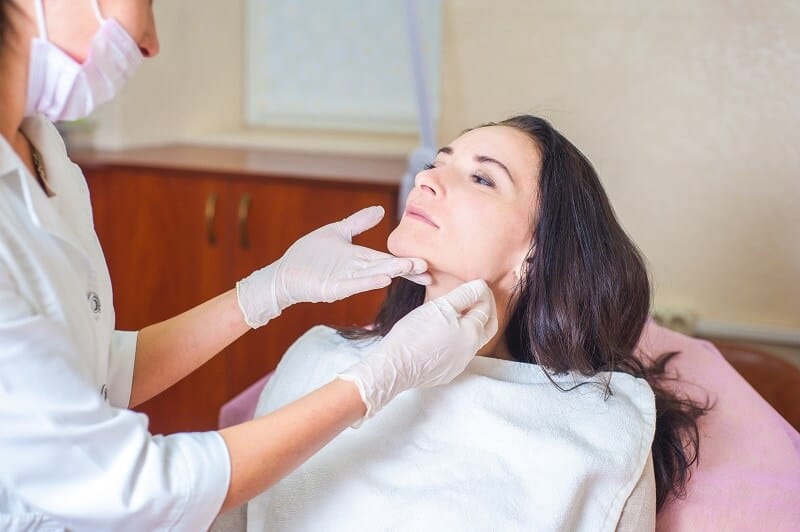
    A botox nurse examining a women's lips
    Toxin can be used around the lips, too

    Botox for lip lines (perioral) lines:

    Pouters beware: Deep lip lines will make you look like a sixty-a-day smoker and it is tough to get rid of them. Botox can relax the muscle around the mouth that causes lip lines, but Dr John Burns, President of the Dallas Plastic Surgery Institute, recommends using only small amounts, otherwise “you can’t pucker and it makes you talk awkwardly.” For deeper ones, he recommends combining toxin with laser resurfacing.

    Lip lines weren’t even on my radar until I noticed them on one of my peers. Toxin does feel a bit restrictive at first, but you can still pout – just.

    Botox Lip Flip

    Where has my cupid’s bow gone? By our late thirties, the bone above our teeth gradually shrinks backwards and our poor lips are left hanging. They start to curl inwards, and the cupids bow flattens.

    A small amount of toxin injected into the middle part of the upper lip relaxes the muscle around the lips until it gently unfurls upwards. There aren’t many optical illusions in the world of aesthetics, but a good derm can make your lips look fuller without filler.

    The results are possibly too subtle for trout pouting millennials who have overdosed on filler, but may well appeal to more mature patients. I started having this treatment many years ago, before it even had a name, and I love it.

    Botox for Chin dimpling

    Again, bad news for pouters. I hadn’t even heard of Botox for chin dimpling until my dermatologist stuck his toxin needle straight in my chin, but Dr Burns has noticed its growing popularity:

    “And then sometimes when they close their mouth, the skin around the chin gets dimply, almost like cellulite on their chin…Botox relaxes the muscle and helps that look better. We do a lot of that.”

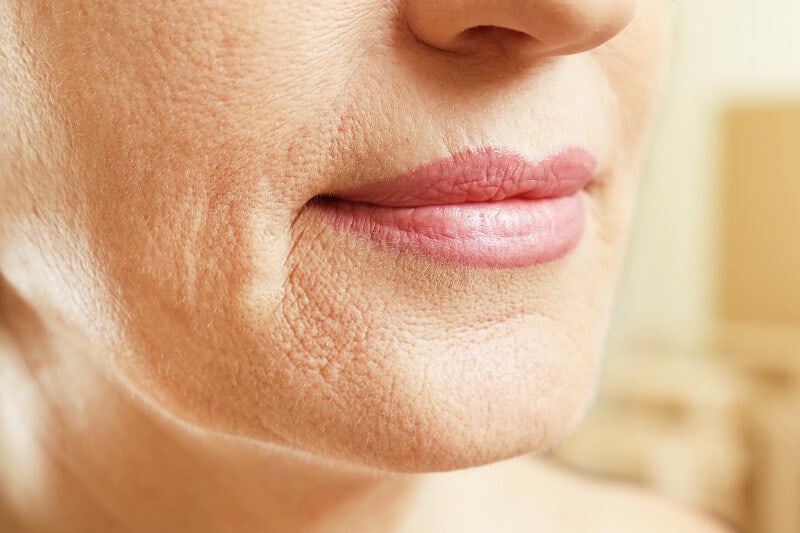
    A women's lips and chin

    Botox Mouth Corner lift

    Do you have ‘resting bitch face?’ Overtime, the corners of the mouth drop downwards, making you look sad and grumpy. Botox subtly lifts the corners of the mouth, so no wonder it’s so popular in Dr Burn’s clinic: “If you use a little bit of Botox, you don’t look quite as angry or old.”

    I remember my dermatologist asking me to grimace: it is only needed if your lips naturally turn down. Guess what – mine did. Just bear in mind that eventually gravity will take its toll – the fold will become entrenched and filler will be needed.

    So, should we all be shooting up Botox?

    Some doctors are sceptical. Dr Uliana Gout, President of the British College of Aesthetic Medicine welcomes a shift towards prevention rather than cure, but prefers to maintain tissue health before reaching for toxins such as Botox. She pointed out that many perioral lines are often caused by sun damage rather than hyperactive muscles:
    “So, because the first thirty years of our life we accrue all the sun damage, the UVA, the UVB, and then the skin thickens up, and you get fine line formation. The epidermis thickens, it gets more leathery- like.”
    Her rounded ‘strategic’ approach considers all layers of the skin:
    “So, for me it’s all about diagnosing what’s happening from an external ageing perspective and internal ageing; so external factors like pollution, sun damage and diet and then internal factors like your genetic predisposition. And then when you know what’s happening there, you look at what’s happening with the skin: the dermis, epidermis. What’s happened to the muscle structure. The fat pads. Then once you narrow it down, then you know how to approach it.”
    So, she starts by prepping the skin with sunscreen and regular exfoliation. Unlike Dr Burns, she recommends resurfacing treatments before trying injectables:
    “Half the challenge we have is really bringing the skin back to normal. You wouldn’t automatically jump to toxin. You would start with resurfacing. You may not have static lines now, but you are developing early onset sign.”
    Let’s hope that Millennials are using sunblock.

    So is ‘prejuvenation’ the future of aesthetics?

    But can ‘prejuvenation’ go too far and have the opposite effect? Dr Christopher Ardant, a biochemist with over twenty years in aesthetics, believes that lack of movement after Botox can ironically be ageing and prefers to keep the face flexible. He warns against the ‘charm of the quick fix’ and prefers a long-term topical approach:

    “when a subject follows a high-tech topical program containing cleansing, toning (to lower skin pH) growth factors and retinoids (especially Retinaldehyde), plus a good daily sunscreen with 18% of zinc oxide (and up), paired with chemical peels (as Modified Jessners) — well those subjects tend to abandon the use of Botox, as the renewed bounciness and elasticity of the skin allows them to look attractive and younger looking.”

    If we address ageing at a cellular level, he states, then patients won’t need to rely on tweakments which can end up looking ‘done’. Perhaps he is the ultimate preventionist.

  • Cleansing Oils: Have you tried one yet?

    Cleansing Oils: Have you tried one yet?

    My cleansing oil story

    When my oily skin turned perimenopausal, it could no longer tolerate my cheap and cheerful Simple facial wash. As a therapist, I have seen dull, dehydrated skin transformed by cleansing oils, so I decided to upgrade.

    Cleansing oils dissolve make-up without drying out the skin

    Unfortunately, the detergents in many water-based cleansers can’t differentiate between hydrating skin oils (lipids) and the oils in make-up – they strip the lot and dry out the skin. (It can take up to twelve hours for lipid levels to be restored). However, cleansing oils have a similar structure to lipids, targeting make-up and excess sebum whilst leaving our precious lipids in place.

    Good bacteria love cleansing oil!

    You are probably fed up with me nagging you about looking after the good bacteria in your gut. I really do believe that the health of your skin is dependent on the health of your gut. Our skin needs to be slightly acidic (between 4.2 and 5.6) for the good bacteria on the surface to flourish.

    These good bacteria work closely with the immune system to strengthen the skin barrier and prevent inflammation (I believe that preventing inflammation is the future, not just for skincare but also for health). Unlike facial washes, cleansing oils have no pH – yay!

    Cleansing oils vs emulsifying cleansing oils: Does it matter?

    Single oil or oil blend cleansing oils leave behind small amounts of fatty acids, which leave the skin soft and supple rather than tight. But does this residue stop active ingredients from penetrating?

    Cleansers need some water-based emulsifiers to remove soluble dirt and sweat.

    (Just remember that whilst cleansing oils have no pH, emulsifying cleansing oils contain a small number of surfactants, so just check the pH. (However, it tends to be fairly low compared to most facial washes).

    To double cleanse or not to double cleanse?

    A few weeks ago, I bumped into an ex-colleague who commented on my ‘glowy’ skin. And then the lady at the deli where I get my sourdough bread asked how my skin looked so bright first thing in the morning!

    Read More:

    Can I use a cleansing oil if I have oily skin?

    I always assumed that cleansing oils were too rich for my spot-prone skin. But for the past year, I have been double cleansing with Clinique Take the Day Off Cleansing Oil, followed by Neostrata Clarifying Cleanser. My skin has been very happy – no spots!

    Read my full review of Clinique Take the Day off Cleansing Oil.

  • Cleansing Oil Review: Medik8

    Cleansing Oil Review: Medik8

    What is it?

    Cleanser / make-up remover

    Who is it for?

    Make-up wearers. All skin types,  including sensitive skin

    Medik8 is one of the few cosmeceuticals to offer a cleansing oil, so I was immediately curious. When it launched in 2009, it recognised a gap in the market: luxury customers were looking for high-quality active ingredients without compromising on cosmetic elegance.

    AM: Vitamin C + sunscreen

    PM: Vitamin A.

    Perhaps this no-nonsense approach is because their founder studied physiology alongside pharmacology.

    Product Claims

    Ultra-gentle oil cleanser gently dissolves impurities and waterproof make-up.

    Optimised ratio of essential lipids to replenish the skin’s natural barrier.

    Leaves skin soft and supple.

    Fragrance?

    That annoying fragrance! There are plenty of non-fragrant plant oils to choose from.

    Read more:

    PH?

    Emulsifies into a gentle cleanser of approximately pH 6. (Annoyingly, Medik8 won’t reveal the pH as if it were some state secret, so I had to use a pH strip).

    Key Ingredients:

    Rich in nourishing fatty acids and vitamin E

    Safflower OilA cold-pressed oil which is made up of more than 70% omega 6Rich in linoleic acid, a fatty acid, which can’t be synthesised by the skin.
    Helps moisturise the skin. Reduces irritation. An emollient non-fragrant oil.
    Vitamin EAn oil-soluble antioxidant that can protect the lipid parts of the cell from free radicals. Found naturally in the skin but levels become depleted by pollution and sun exposure.
    Omega 6: (Linolenic Acid) Anti-inflammatoryEFA (essential fatty acid) which can’t be synthesised by the body. Rebalances the skin’s lipid levels. Antioxidant, skin-soothing, emollient
    Moringa seed oil extractHelps remove the build-up of daily pollutants. A natural cleanser: binds to dirt and pollution. Non-fragrant plant oilGood source of oleic acid which strengthens barrier. Mono fatty acid with has a light texture. Antioxidant. Calming

    Irritants?

    Fragrant plant oil: Geranium oil. Fortunately, it is low down the ingredients list.

    No parabens, no sulphates, no perfume, 100% soap-free.

    How does it feel? Absorption Rate?

    Much richer than Clinique Take the Day off Cleansing oil, which ironically doesn’t contain any oil.

    Read more:

    Where does it fit into your routine?

    AM: Use alone

    PM: Use alone or as part of a double cleansing routine. Even though it emulsifies, I like to double cleanse with a water-based cleanser afterwards. For many people, this would be overkill, but I use so much sunscreen and live in a polluted area.

    1. First of all, massage straight onto dry skin to dissolve your make-up
    2. Add water to emulsify and continue to massage in
    3. Finally, rinse off thoroughly

    Pros

    Dissolves makeup (including mascara) and sunscreen easily without drying out the skin.

    An excellent blend of ingredients to restore the skin’s barrier and protect against pollution.

    Cons

    Unfortunately, Geranium oil is a fragrant oil and potentially a skin irritant. What a shame – there are so many other fabulous oils to choose from. I hope you are listening Medik8.

    Would I repurchase?

    I still recommend this product in my salon, despite the geranium oil. I guess no product is perfect.

  • My top 10 Cleansing tips. How dirty is your skin?

    My top 10 Cleansing tips. How dirty is your skin?

    Here are my top ten cleansing tips:

    Despite my nagging, I have a few badly behaved clients who underestimate the importance of thorough cleansing. Stale make-up and pollution stretch and block the pores overnight and prevent product penetration: dirty skin simply can’t breathe.

    Hopefully, this post will shame/scare them!

    1. Swap cleansing wipes for a micellar water

    I would love to ban all wipes. The harsh chemicals and preservatives strip the protective oils from the surface of your skin and leave a residue which prematurely ages your skin overnight.

    Also they are fairly useless at cleansing because they only work on the surface. Swap them instead for a micellar water, which is far more gentle. The tiny particles of oil, suspended in soft water, cleverly pull dirt off the skin like a magnet.

    My low-maintenance clients love them.

    2. Cleansing with ‘natural’ soaps will dry out your skin

    I am fed up with hearing: ‘But it’s a natural soap!’ It makes no difference whether you bought it from a hippie or a supermarket – soaps are alkaline and will disturb your acidic skin barrier. Soap strips the natural oils from the skin’s surface, leaving behind insoluble salts that are incredibly drying.
    Never trust a skincare company that won’t tell you the pH of its products. The ideal pH of any cleanser should match the skin (4.2 – 5.5), but most soaps are between 7 and 9 – downright dangerous. Use on your armpits only!

    3. Avoid cleansing with a foaming wash

    Avoid any cleanser that leaves your skin feeling tight – it is probably too alkaline and has dissolved your precious skin oils. We need those natural oils to protect our skin from the cold and wind, especially over the winter.

    Remember that foam is just a detergent.

    Read More:

    4. Single cleanse in the morning – not just a splash of water in the shower!

    Many of my clients consider a splash of water plenty in the morning, but it is not enough to remove oil, toxins and dead skin cells left on the surface overnight.

    I know everyone is rushed in the morning, but try a single cleanse with a facial wash (never shower gel!) instead. 

    If hard tap water leaves your skin feeling tight, wipe over with micellar water instead.

    5. Double cleanse as soon as you get home to remove pollution

    I always recommend double cleansing as soon as you get home.
    Most clients are too knackered to cleanse correctly at the end of the evening and just collapse into bed. However, pollution left settling on your skin will cause pigmentation and premature ageing, so the sooner it is removed, the better.

    ReadMore:

    6. First cleanse: oil based make up remover

    I love cleansing oils: they loosen make-up and physical sunscreen gently and effectively. Massage all over your face to speed up blood circulation and warm up the skin (warm, relaxed pores are much easier to clean); then splash with water to emulsify.

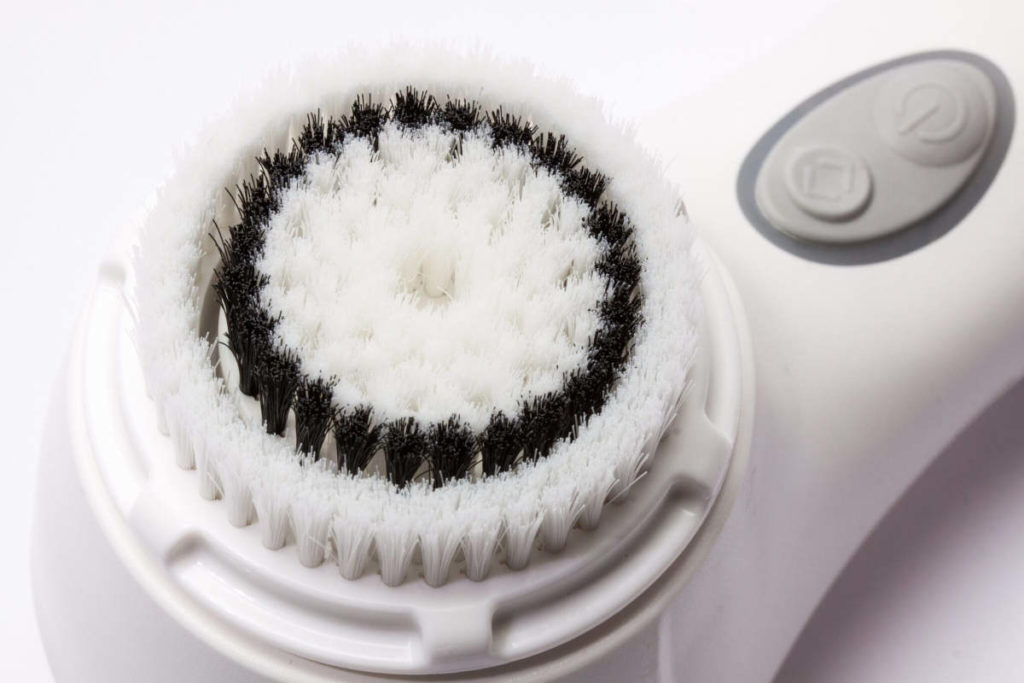
    A skin cleansing brush
    A skin cleansing brush

    7. Double cleanse with a facial wash

    Oil-based make-up removers only remove oil-soluble make-up and dirt, so you need to double cleanse with a wash to remove water-soluble dirt.

    Pollution nanoparticles have sharp edges, so use warm rather than hot water (which dries out the skin) and be careful to massage and not rub delicate, wet skin.

    Choose a gel cleanser with mild detergents, but if your skin still feels tight (especially over the winter), use a creamy wash or micellar water instead.

    8. Double cleanse with an electronic cleansing brush

    Cleansing brushes, like this one here. can be handy, especially if you live in a polluted area. However, do not overuse them, especially over the winter, because they can overstimulate sensitive skin and lead to spots.

    Start using it twice a week and see how your skin tolerates it.

    9. Blot dry with a microfibre towel after cleansing

    Finally, blot dry with a super-absorbent microfibre towel – no rubbing!

    10. Don’t cheat!

    No cleansing, no bed!

  • Pha Exfoliation: Review of Neostrata Bionic Cream

    Pha Exfoliation: Review of Neostrata Bionic Cream

    Claim

    Neostrata Bionic Cream (Pha 12%) forms part of the Restore range, which provides ‘powerful anti-ageing benefits for sensitive skin’.

    Neostrata

    Do I use it in my salon?

    It is so gentle that I use it to calm inflammation after peels. I also recommend it for clients using retinoids for the first time to cope with the initial dryness.

    What is it?

    Exfoliating moisturiser (12% Pha).

    What is Pha exfoliation?

    8% Gluconolactone (3rd ingredient).

    4% Lactobionic acid (4th ingredient).

    Phas are the more gentle cousin of Ahas – chemical exfoliants that gently dissolve the glue that sticks dead skin cells to the skin’s surface.

    No physical scrubbing is needed! Phas have a larger molecular structure than Ahas (so they penetrate more slowly and cause less irritation), and they are also natural humectants which help keep the skin hydrated.

    Admittedly there is not much research into Phas, but I trust Neostrata.

    Admittedly there is not much research into Phas, but I trust Neostrata.

    Which skin type?

    The Bionic Cream has the richest texture of all the Restore range – almost like a balm. Best for normal to dry and dry skins.

    Controversial ingredients?

    • Non-comedogenic – but gave my oily skin spots
    • No parabens
    • Fragrance-free

    How does it smell?

    My clients all hate the smell!

    Read More:

    Silicones?

    Yes – the 2nd ingredient. Very silicone-based, which is a shame.

    I challenge Neostrata to make a silicone-free moisturiser!

    I can see a big difference between clients who use silicone-based products and those who use plant oils. Silicones form a film like clingfilm over the top but do not actually penetrate and strengthen the barrier long-term – plant oils are more effective.

    Meadowfoam seed oil is an excellent oil which calms irritation and hydrates – if only there was more of it.

    How does it feel?

    Ultra-emollient.

    How long before you see results?

    My husband has been using it to calm his reddened, flaking skin following a psoriasis outbreak.
    First of all, his GP prescribed Betnovate RD steroid cream for seven days to calm the inflammation.
    However, it is hard to persuade a man to moisturise twice a day, let alone use a serum as well.
    For seven days and nights, I nagged him into the following routine:
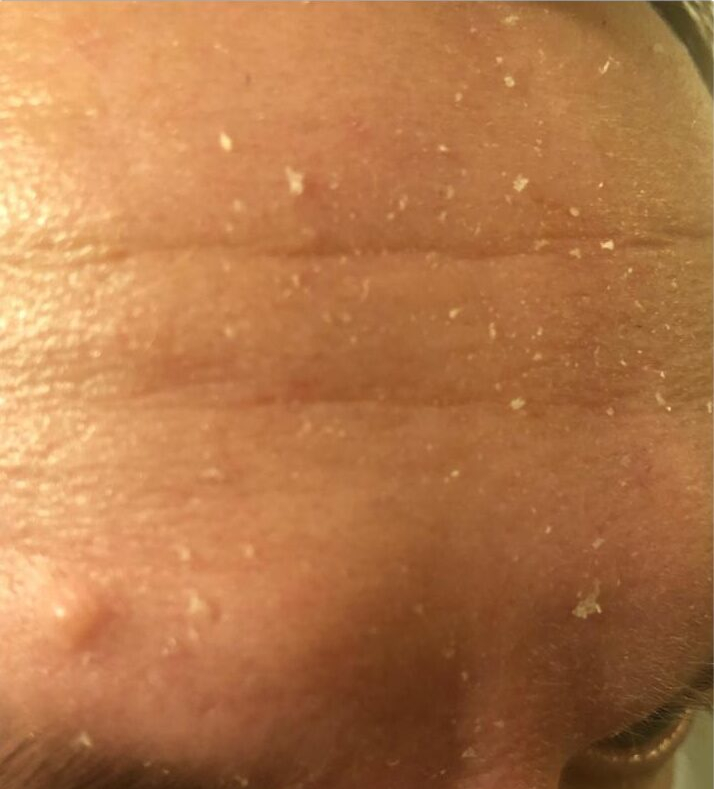
    Before using Neostrata Bionic Face Cream

    A mans skin before using Neostrata Bionic Face Cream
    Before using Neostrata Bionic Face Cream

    Routine AM

    1. Simple Kind to Skin Micellar Cleanser
    2. Neostrata Bionic Cream

    Routine PM

    1. Simple Kind to Skin Micellar Cleanser
    2. Neostrata Bionic Serum
    3. Neostrata Bionic Cream

    On the nights he was too tired to follow the routine, I threatened to put it on myself.
    At the end of the week, the flaking on the forehead was much improved, but he still had a bit around the nostrils. The redness will take longer.

    A mans skin after using Neostrata Bionic Face Cream
    After using Neostrata Bionic Face Cream

    Pros

    Neostrata is a true innovator -all their products contain chemical exfoliants.
    So many anti-ageing products can leave sensitive skin inflamed and irritated, but Bionic Cream intensely hydrates yet gently exfoliates. It fills a gap in the market.

    Cons

    Silicones! Clients love the texture of silicone-based creams because they do not leave a sticky residue, but they are a quick fix and do nothing to strengthen the skin’s barrier long-term.

    Would I repurchase?

    I am trying to persuade him to buy it for himself next time!

  • Low-Fat Diets: bad for your skin and your waistline?

    Low-Fat Diets: bad for your skin and your waistline?

    Abandon your low-fat diet immediately – it might kill you!

    A recent study sensationally contradicted years of dietary wisdom: low-fat diets have a 23% higher risk of death than high-fat diets.

    How is this possible? Surely fat, especially saturated fat, increases our cholesterol levels, clogs our arteries and increases our chances of getting heart disease? Surely fat makes you fat?

    Low-fat diets make you fat and wrinkly

    I am not surprised, however – I have been telling my clients this for years, but they never believe me.
    Dieters inevitably fall off the wagon (usually with an almighty binge) because low-fat diets are boring and don’t fill you up -dieters really don’t stand a chance. Food manufacturers are diet saboteurs. They sneakily replace the fat with sugar – they have to get the flavour from somewhere. So blood sugar levels rise, and cravings kick in. Sugar also prematurely ages our skin (making our collagen go brittle), so ironically, you get fat and wrinkly.
    But that’s not all. Food manufacturers have also added trans-fats (manufactured fats) as preservatives to many processed diet meals. Our body simply doesn’t know how to break them down, so they are dumped on our thighs and belly.

    Read More:

    Your skin loves fat – but keep it clean!

    If a new client’s skin and hair are a bit dry, I always check if they are eating enough good fats. Fats lubricate the skin from within (they strengthen the cell walls to stop moisture escaping), whereas moisturisers can only work on the outer layer of skin – which is mostly dead!


    If we ate for fuel, diets would be easy, but most of us eat for pleasure or self-medicate when feeling a bit low/ bored/stressed. I advise my clients to prevent cravings by indulging in a few regular treats, even saturated fats. (Unless you have high cholesterol). Whilst not perfect, saturated fats are real foods: natural and unprocessed. Although fat is higher in calories than carbs, real foods take longer to digest, so you feel fuller for longer. So leave the fat on your meat – it adds much-needed flavour. Also, go back to full-fat milk – skimmed is so joyless!

    A little bit of what you fancy stops you from bingeing.

    Your skin loves the Mediterranean Diet

    I recommend the Mediterranean diet to all my clients: plenty of fruit and vegetables, good fats such as nuts, oily fish and olive oil, and plenty of wholegrains (limit your portion size to 50g to keep blood sugar levels steady), and protein to fill you up: white meat, bean and legumes.
    Then a naughty treat a couple of times a week – something to look forward to.
    Eat good quality real food, nothing processed, preferably organic.
    Eat every three to four hours, so you don’t binge at mealtimes because you are starving.
    Place less emphasis on calories (although be aware of them) and more focus on keeping your blood sugar levels steady to prevent cravings.